
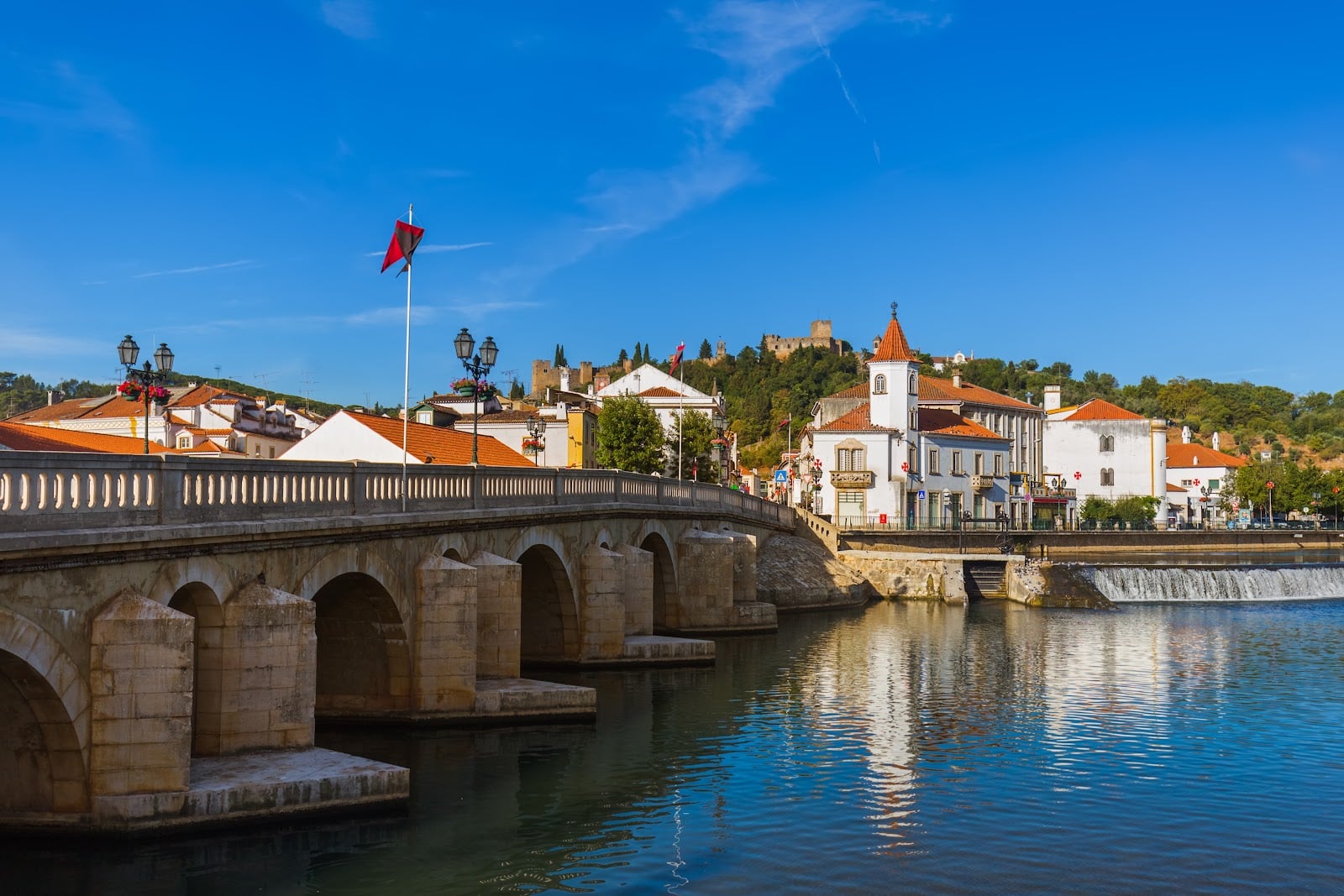
Tomar preserves one of the oldest synagogue buildings in Portugal, a fifteenth-century structure saved from obscurity thanks to the research of Samuel Schwarz. This article explains the building's history and significance.
An Early Synagogue in Tomar
The former synagogue in Tomar dates to the fifteenth century, built before the expulsion and forced conversion decrees of 1496 and 1497 brought an end to open Jewish religious life in Portugal for centuries.
It is considered one of the oldest surviving synagogue buildings in the country, a rare physical link to the organized Jewish communities that existed in Portuguese towns before that turning point.
Like many such buildings, it was repurposed for other uses after the forced conversions, since open Jewish worship was no longer possible and the structure needed a new function within the town.
From Synagogue to Other Uses
After the Jewish community in Tomar was forced to convert or leave, the synagogue building was converted to secular use and served various purposes over the following centuries, a common fate for former synagogues across Portugal.
This pattern of reuse often obscured the original religious function of such buildings, meaning that later generations sometimes lost clear awareness of what the structure had originally been built for.
The building's survival in any form, even repurposed, made it possible for later researchers to rediscover and document its original use once renewed interest in Portugal's Jewish history emerged.
Samuel Schwarz and Rediscovery
Samuel Schwarz, a mining engineer and researcher with a deep interest in Portuguese Jewish history, played a central role in identifying and documenting the Tomar building as a former synagogue in the early twentieth century.
Schwarz is also closely associated with bringing wider attention to the crypto-Jewish community of Belmonte, and his broader research helped establish much of the modern understanding of how Jewish identity persisted quietly in Portugal after 1497.
His work on Tomar specifically helped preserve recognition of the building's original purpose, contributing to its eventual protection and public presentation as a historical site rather than allowing its history to be forgotten.
The Building Today
The former synagogue in Tomar today functions as a space presenting Jewish historical material, reflecting its origins while no longer serving as an active place of worship for a resident community.
Its architecture, dating to the medieval period, offers visitors a sense of how synagogue buildings of that era were constructed, distinct from more modern synagogues built later in cities like Lisbon and Porto.
Because it is a former rather than active synagogue, visitors should approach it with an understanding that it now serves a commemorative and educational role rather than ongoing religious use.
Tomar's Place in Portuguese Jewish History
Tomar's former synagogue stands alongside other surviving structures in towns such as Castelo de Vide as rare physical evidence of pre-expulsion Jewish life in Portugal, making it an important stop for understanding this period.
The town's broader history, including its associations with the Knights Templar and later the Order of Christ, adds additional historical layers that visitors often explore alongside the Jewish heritage sites.
Considering Tomar alongside Samuel Schwarz's research more broadly helps situate the building within the larger story of how Portugal's Jewish past was documented and brought back into public awareness during the twentieth century.
Visiting Tomar as Part of a Longer Route
Iberian Heritage Journeys includes Tomar within its private multi-day Jewish heritage travel itineraries across Portugal and Spain, with private heritage driver-guides able to provide context on the building and on Samuel Schwarz's research.
Tomar fits well within a 6-day highlights itinerary or a 10-day complete immersion itinerary, and can also be included in the 12-day Iberian journey for travelers covering sites in both Portugal and Spain.
As with all itineraries, these journeys do not include genealogy research or citizenship and legal services, focusing instead on historical and cultural exploration of the sites themselves.
Visitors planning a trip benefit from understanding this background in advance, since it adds depth to the experience of standing in these historic places and helps connect what is seen on site to the longer arc of Portugal's Jewish history across different regions and centuries.
Visitors planning a trip benefit from understanding this background in advance, since it adds depth to the experience of standing in these historic places and helps connect what is seen on site to the longer arc of Portugal's Jewish history across different regions and centuries.
Visitors planning a trip benefit from understanding this background in advance, since it adds depth to the experience of standing in these historic places and helps connect what is seen on site to the longer arc of Portugal's Jewish history across different regions and centuries.
Plan your Jewish heritage journey
Share your dates, interests and group size and we will suggest a tailored private itinerary with a local driver/guide, including heritage-focused visits. Access arrangements are confirmed before booking.