
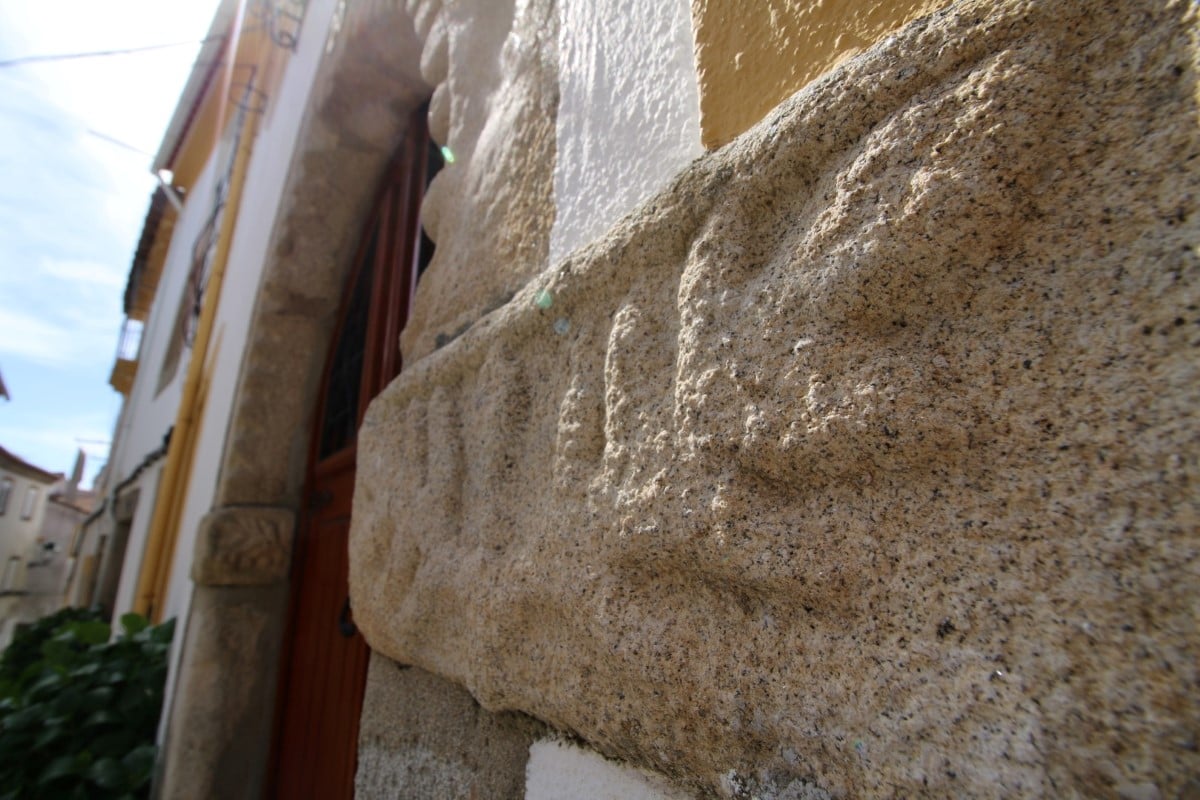
Castelo de Vide preserves one of Portugal's clearest examples of a medieval Jewish quarter alongside a former synagogue that now serves as a museum. This guide focuses on how the two relate within the town's layout.
A Well-Preserved Medieval Quarter
Castelo de Vide, in the Alto Alentejo region, retains a notably intact medieval Jewish quarter, with narrow streets and stone houses that give a strong sense of how the neighborhood would have looked before the expulsion and forced conversion decrees of the late fifteenth century.
The quarter grew in the medieval period as part of the town's wider Jewish community, which, as in other Portuguese towns, lived under specific legal and residential arrangements defined by royal policy.
Because much of the physical fabric of the quarter survives, Castelo de Vide offers one of the more complete pictures in Portugal of what a Jewish neighborhood from this period actually looked like.
The Former Synagogue Building
Within the quarter stands a former synagogue building, one of the few in Portugal to survive from before the forced conversions of 1497, giving it particular significance for understanding pre-expulsion Jewish religious life.
After the community was forced to convert or leave, the building lost its original religious function and was used for other purposes over the following centuries, following a pattern common to former synagogues across the country.
Recognition of the building's original purpose was documented through later historical research, which helped establish its significance and eventually led to its preservation and public presentation.
A Museum Within the Former Synagogue
Today the former synagogue building in Castelo de Vide functions as a museum, presenting material related to the history of the Jewish quarter and the community that once lived there.
The museum's exhibits help visitors understand both the religious use of the original building and the broader context of Jewish life in Castelo de Vide before the upheavals of the late fifteenth century.
Because the building now serves as a museum rather than an active synagogue, visitors should understand it as a historical and educational site rather than a place of ongoing worship.
Walking the Streets of the Quarter
Visitors to Castelo de Vide often combine a visit to the former synagogue museum with a walk through the surrounding quarter, where the layout of streets and houses still reflects the medieval period.
This combination allows the museum's historical material to be understood in direct relation to the physical setting, since the building and its surroundings together illustrate how the Jewish community was integrated into the town.
The quarter's preservation owes much to the relatively limited later development of Castelo de Vide, which has helped maintain the medieval street pattern more fully than in many larger Portuguese towns.
Historical Context of the Jewish Community
Like other Jewish communities across Portugal, the one in Castelo de Vide was affected by the 1496 expulsion decree and the mass forced conversions of 1497, after which open Jewish practice ceased in the town.
Some families likely continued elements of Jewish practice in secret as New Christians, a pattern documented more extensively in other communities such as Belmonte, though direct evidence specific to Castelo de Vide requires careful historical sourcing.
The town's former synagogue and quarter together stand as physical evidence of a community whose formal religious life ended with the expulsion period but whose built environment remains a valuable historical record.
Including Castelo de Vide in a Heritage Itinerary
Iberian Heritage Journeys incorporates Castelo de Vide into its private multi-day Jewish heritage travel itineraries across Portugal and Spain, with private heritage driver-guides providing historical context for both the quarter and the former synagogue museum.
Its location in the Alto Alentejo makes it a natural stop within the 6-day highlights itinerary or the 10-day complete immersion itinerary, often paired with nearby towns that share related histories.
Genealogy research and citizenship or legal services are not included in these itineraries, which remain focused on historical and cultural travel through the region.
Visitors planning a trip benefit from understanding this background in advance, since it adds depth to the experience of standing in these historic places and helps connect what is seen on site to the longer arc of Portugal's Jewish history across different regions and centuries.
Visitors planning a trip benefit from understanding this background in advance, since it adds depth to the experience of standing in these historic places and helps connect what is seen on site to the longer arc of Portugal's Jewish history across different regions and centuries.
Plan your Jewish heritage journey
Share your dates, interests and group size and we will suggest a tailored private itinerary with a local driver/guide, including heritage-focused visits. Access arrangements are confirmed before booking.