Spend a day between Castelo de Vide’s intimate streets and Marvão’s commanding walls, discovering the people, flavours and frontier stories of Portugal’s northeastern Alentejo.
Begin where the town is waking
Begin in Castelo de Vide, with coffee rather than a castle. Around Praça de Dom Pedro V, chairs scrape across café terraces and the white façade of the Igreja de Santa Maria da Devesa catches the morning light. Above the square, houses climb towards the fortress in a jumble of tiled roofs and granite doorways. This is the northeastern Alentejo, close to Spain, where the Serra de São Mamede brings wooded slopes and a different mood from the region’s broad southern plains.
Castelo de Vide and Marvão sit roughly 10 kilometres apart by road, making them natural companions for a day. They reward different kinds of attention: one draws you into lanes and doorways; the other sends your gaze across an immense landscape. For a Portugal Magik journey, a local driver/guide can shape the day around the guests, allowing more time for history, a longer lunch or fewer steep climbs. A Mercedes-Benz vehicle handles the journey between them, but the most telling discoveries happen on foot.
Doorways that hold a difficult history
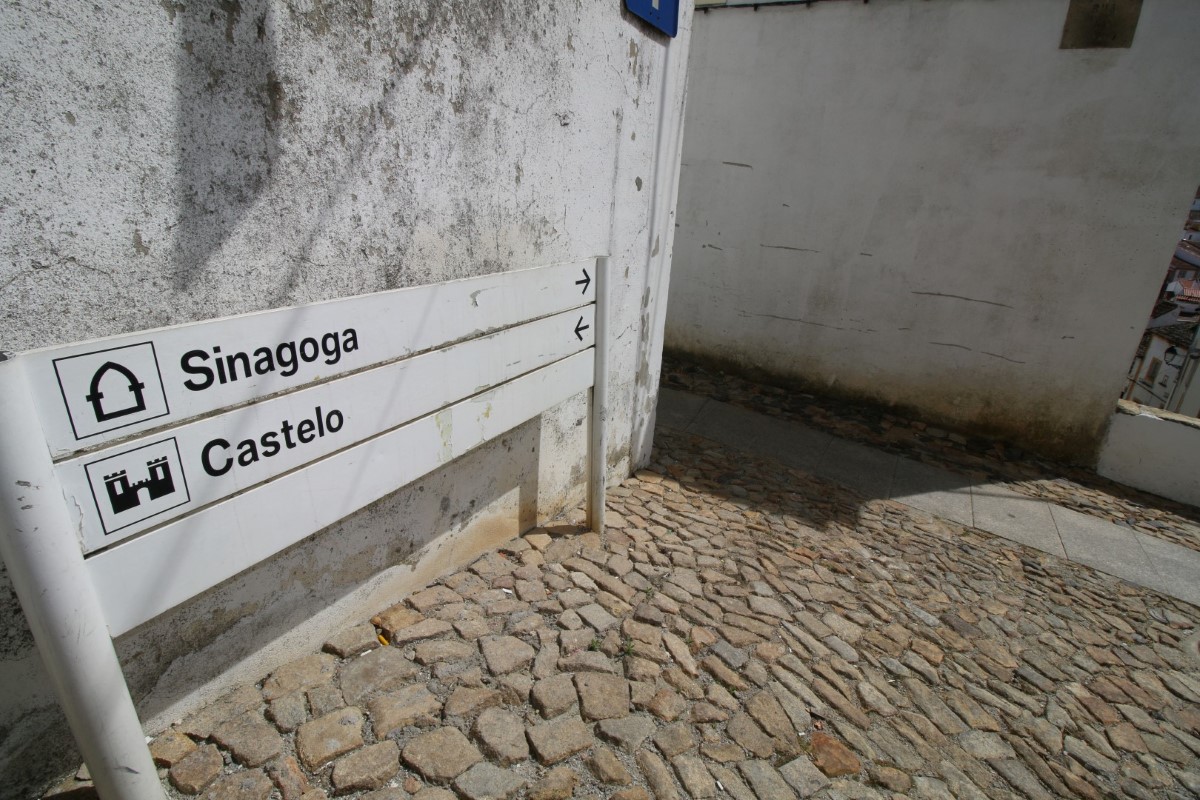
From the square, follow the rising streets towards the castle and the former Jewish quarter. Granite frames survive around doors and windows, sometimes with pointed arches that make an ordinary house frontage worth a second look. Near Rua da Judiaria, the building traditionally identified as the medieval synagogue now houses a museum interpreting the town’s Jewish heritage. Check opening arrangements before making it the centrepiece of your morning.
The border matters here. After Spain’s expulsion of its Jews in 1492, refugees entered Portugal, and Castelo de Vide became one of the places touched by that movement. Portugal’s own expulsion decree of 1496 and forced conversions in 1497 brought further upheaval. The story deserves more than a picturesque photograph of an old doorway.
Continue to the Fonte da Vila, a Renaissance fountain sheltered beneath a roof supported by marble columns. After the museum’s weightier history, its practical purpose feels grounding: fresh water, collected daily, sustained the people who lived along these streets.
A castle, then a proper Alentejo lunch
Climb towards Castelo de Vide’s castle while the morning still has some coolness. Within the older fortified area, narrow streets and small houses make the defensive walls feel part of a lived-in neighbourhood rather than an isolated monument. From higher ground, the surrounding hills come into view, and Marvão begins to make sense as a companion stronghold. These were places from which people watched roads, approaches and one another.
Return downhill for lunch before taking on the second hilltop. Look for an Alentejo menu that treats bread as an ingredient, not simply something placed beside the plate. Migas, made from bread and often served with pork, are a satisfying choice. Açorda alentejana takes another form: a garlicky, coriander-scented broth poured over bread, commonly with an egg.
Depending on the kitchen and season, you might also find lamb stew or goat dishes. Ask about sheep’s cheese from nearby Nisa, whose protected designation recognises a distinctive regional tradition. Order according to appetite, with enough time to enjoy what arrives.
Browse our travel inspiration for ideas, or tell us what kind of day you have in mind.
The road turns towards Marvão
The short drive to Marvão changes the scale of the day. Among cork oaks, chestnuts and granite outcrops, the landscape rises towards a pale line of walls. The village occupies a narrow ridge at more than 800 metres above sea level, within the Serra de São Mamede Natural Park. Its position is striking from below, long before you reach a gateway.
Marvão’s name is generally linked to Ibn Marwan, the ninth-century rebel leader associated with this mountain refuge. Portuguese forces took the stronghold in the twelfth century, and later royal building campaigns strengthened its defences. Standing beneath the walls, you can understand the attraction without needing a military diagram: steep rock does much of the defensive work.
Leave the vehicle in an appropriate parking area and enter on foot. The lanes are narrow, with uneven paving and gradients that favour comfortable shoes. Take water in warm weather and an extra layer when the forecast suggests wind on the exposed summit.
Inside the walls, look down before looking out
It is tempting to go straight to the castle, but give the village a little time first. Whitewashed houses sit against the granite, pots brighten thresholds, and occasional gaps between buildings reveal startling drops into the countryside. Near the former Igreja de Santa Maria, which houses the municipal museum, the formal garden offers a gentler pause before the fortress. Museum displays provide context for a landscape whose history reaches well beyond its medieval walls.
At the castle, seek out the great cistern as well as the viewpoints. This vast covered reservoir explains something the panorama cannot: survival during a siege depended on stored water as much as strong masonry. It is a useful counterpoint to all the open sky.
Then look outward. Fields, wooded ridges and scattered settlements extend towards Spain, showing why this height mattered along a contested frontier. Some wall walks and steps are exposed, so choose your route with care rather than feeling obliged to follow every stretch.
Let the afternoon finish quietly
Allow the final hour to remain unhurried. Return through the village, stop for coffee, or find a sheltered place to sit while the light shifts across the slopes. In autumn, chestnuts connect the table to the surrounding trees; Marvão celebrates them at its annual Feira da Castanha. Outside that season, ask what is local rather than expecting a particular sweet or dish to appear on every menu.
By now, the two towns have supplied different memories. Castelo de Vide may stay with you as the sound of water at the Fonte da Vila, or a doorway made newly significant by the museum’s history. Marvão is harder to separate from its height, yet the cistern and close-set houses give that grand view a human scale. On the road away, look back once more. The walls seem improbably delicate from a distance, after a day spent discovering how much they contain.
Plan your own day
Share your dates, group size and interests, and we will suggest a tailored plan with a local driver/guide.