Spend a day in Nazaré looking beyond the famous waves, into a fishing town shaped by beach landings, salt-dried fish and the people who kept watch from shore. From the morning market to the heights of Sítio, the Atlantic gives every stop its meaning.
Morning Begins Behind the Promenade
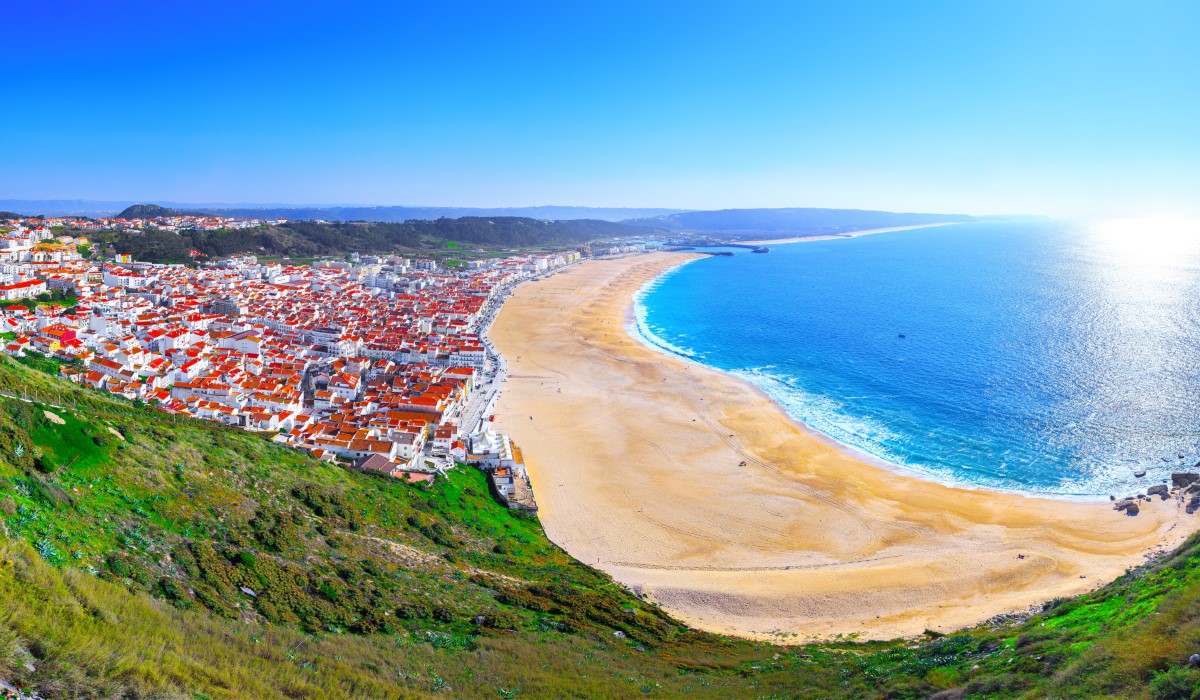
Arrive in Nazaré before lunch has become the main event. Along Praia da Nazaré, the broad town beach, the Atlantic fills the view, but turn into the streets behind the promenade and the day becomes more intimate. A café counter, a shopping bag, the sound of crockery through an open doorway: these are good beginnings in a place too often reduced to a photograph of an enormous wave.
The Mercado Municipal da Nazaré offers a useful first introduction during its morning trading hours. Look at the fish counters alongside the produce stalls, and notice how much of the town’s appetite comes from nearby water. The selection changes with season, weather and landings. Sardines are not a year-round promise, and that is part of the lesson. Fishing traditions begin with what the sea allows, not what a visitor expects to find.
A Beach That Once Served as a Harbour
Back beside the sand, seek out the traditional boats displayed along the beachfront. Their bright paint and curved profiles make an inviting picture, but they also suggest the difficulty of working from an exposed shore. Before Nazaré’s fishing harbour opened in the 1980s, crews launched boats through the surf and brought them back onto the beach. Oxen helped haul boats ashore, a scene preserved in old photographs of the town.
One important local practice was arte xávega, a form of beach seine fishing in which a net taken offshore was drawn back towards land. The work joined boat crews and people on the beach in a single effort. Tourism has transformed the waterfront, and today’s commercial fishing belongs largely to the harbour at the southern end of town. Still, standing on this open beach makes the older arrangement unusually easy to understand: the workplace had no shelter from the Atlantic.
Salt, Sun and the Women of Nazaré
Near the beachfront, the fish-drying area known as the estendal keeps another part of that working history visible. Fish laid on raised mesh racks meet the sun and moving air after preparation and salting. You may see horse mackerel, known locally as carapau, among the fish being dried. This was a practical response to abundance and uncertainty, preserving a catch beyond the day it came ashore.
Women played an essential role in processing and selling fish while also carrying the uncertainties of a fishing household. Nazaré’s famous seven skirts belong to that wider story, though explanations for the number vary and should be treated as local interpretations rather than settled fact. Some women still wear traditional dress, particularly around the visitor-facing waterfront. Ask before taking a portrait, and approach a fish seller as a person at work, not as part of a display. A purchase and a courteous question are better introductions than a camera held at a distance.
Browse our travel inspiration for ideas, or tell us what kind of day you have in mind.
Lunch With Something of the Catch in It
By midday, the morning’s objects have become ingredients. Choose a restaurant that is clear about the fish available that day, rather than ordering from an imagined version of the coast. A simply grilled fish with boiled potatoes and vegetables can be all the occasion needs. In the warmer sardine season, grilled sardines bring their own aroma to the streets, but another catch may be the more sensible choice on your visit.
For a meal that invites a longer pause, look for caldeirada, the Portuguese fish stew commonly made with potatoes, onion, tomato and a mixture of fish. Recipes differ between kitchens, and some restaurants prepare it for two or require advance notice. Nazaré is also associated with dried horse mackerel, sometimes served after rehydrating and cooking, with olive oil and vinegar. If it appears on the menu, it offers a direct connection to those drying racks. This is preservation tasted at the table, not merely admired beside the beach.
Up to Sítio, Where Watching Had Meaning
After lunch, climb towards Sítio, the neighbourhood above the great cliff, either by road or on the funicular when it is operating. From the Miradouro do Suberco, the town beach curves below and the ocean stretches beyond any useful measure. After a morning spent considering fishing families, the height suggests something besides scenery: the long habit of looking out to sea.
Nearby stands the Sanctuary of Nossa Senhora da Nazaré, a place of pilgrimage whose devotion became closely bound to maritime life. The small Ermida da Memória recalls the legend of Dom Fuas Roupinho. According to the story, in 1182 the Virgin saved him when his horse nearly plunged over the cliff while he pursued a deer in mist. It is a legend, not a documented rescue, but its setting gives it force. On this coast, danger and gratitude have long found expression in sacred places.
The Other Beach, and the Journey Home
Continue towards the Forte de São Miguel Arcanjo for a view towards Praia do Norte. This is the coast of the celebrated giant waves, whose exceptional size is linked to the offshore Nazaré Canyon and particular swell conditions. Such waves are not an everyday spectacle. Even on a quieter afternoon, stay on designated routes and respect barriers and local warnings. The distinction between the sheltered-looking town frontage and this exposed northern beach is an important final chapter.
With Portugal Magik, a local driver/guide can shape the day around the guests, allowing more time for the market, a leisurely fish lunch or the viewpoints, with travel between stops in a Mercedes-Benz vehicle. Leave room for one last coffee back in town. What stays with you may not be the biggest view, but the relationship between ordinary things: a net, a rack of drying fish, a church above the cliff and a dinner made possible by someone else’s morning at sea.
Plan your own day
Share your dates, group size and interests, and we will suggest a tailored plan with a local driver/guide.