A gentle journey from Lisbon to Porto through Óbidos, Nazaré and Coimbra, with time for old streets, generous lunches and a day beside the Atlantic that stays with you.
Day 1: Lisbon, beginning beside the Tagus
The first morning begins with a teaspoon against a coffee cup and a little cinnamon falling onto a warm custard tart. Outside, Lisbon is getting on with its day. There is no need to hurry after it. Over the next six days, the road north will lead through Óbidos, Nazaré and Coimbra before reaching Porto, but today belongs to the Tagus and the pleasure of arriving.
Start in Belém, where you can admire the exterior of the Jerónimos Monastery, commissioned by King Manuel I in the early sixteenth century. Its carved stonework recalls the wealth and ambition of Portugal’s maritime expansion. Afterwards, walk towards the river, finding a bench if the sun is out. A pastel de nata and a small coffee make a perfectly good reason to linger.
Portugal Magik’s private driver/guide handles the roads and pacing in a Mercedes-Benz vehicle, with the whole plan open to reshaping around your own ideas. Leave the afternoon free for a neighbourhood stroll or a rest before dinner. Tonight, sleep in Lisbon, with no bags to pack until morning.
Day 2: Óbidos, behind the town walls
Allow roughly an hour and a quarter on the road from Lisbon to Óbidos. The change of scale is immediate: city avenues give way to a town you can explore slowly on foot. Enter through the tiled Porta da Vila and follow Rua Direita, then take one of the smaller lanes where flowerpots sit against whitewashed walls.
Óbidos became closely associated with Portugal’s queens after King Dinis gave it to Queen Isabel in 1282. That royal connection lasted for centuries, although the everyday details may hold your attention longer than the dates: a worn doorstep, a church bell, the cool air inside a little shop. Pause in Praça de Santa Maria, with its parish church and stone pillory, rather than trying to cover every lane.
After lunch, try a small glass of ginjinha, the sour cherry liqueur commonly served here, sometimes in a chocolate cup. Keep the rest of the afternoon free for browsing or sitting with a book. Staying overnight in Óbidos means you can enjoy the streets again towards evening, when the day’s rhythm often softens.
Day 3: Nazaré, the day you keep talking about
Nazaré is only about forty minutes away, so breakfast need not be rushed. Soon the Atlantic appears, and the journey acquires a different sound. Down beside Praia da Nazaré, waves fold onto the broad sand while people carry shopping bags along the promenade. This is the day I would leave most open, because the sea has a way of making other plans seem less important.
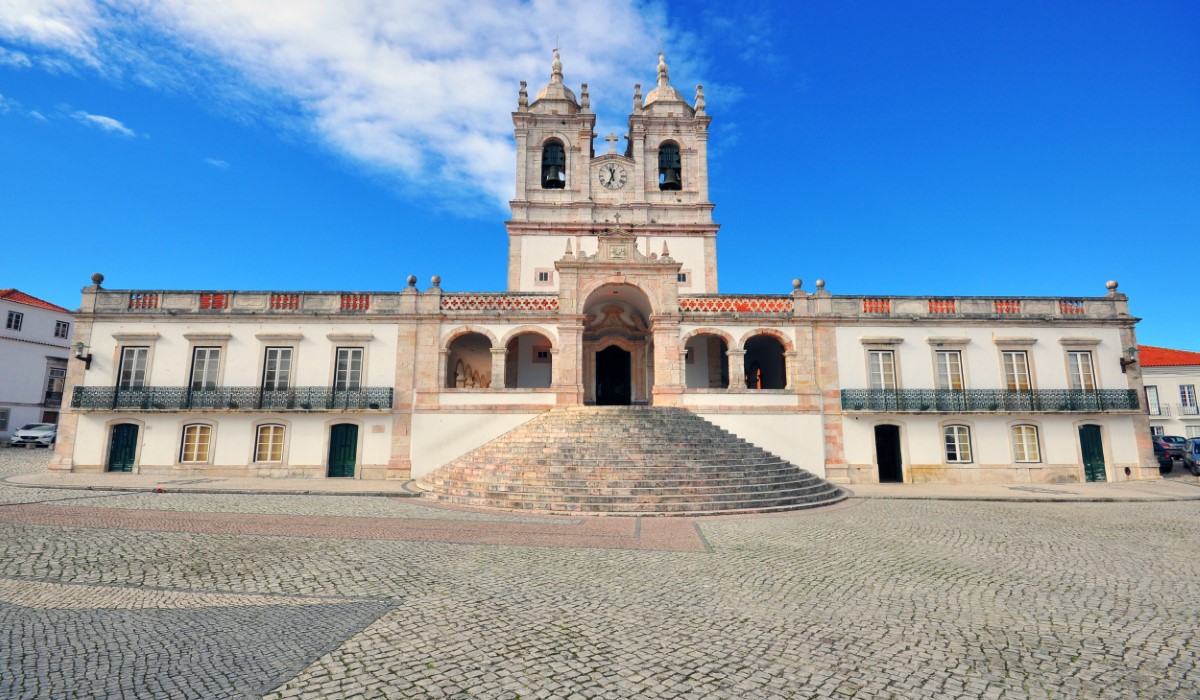
Begin above the beach in Sítio, the clifftop neighbourhood overlooking the town. From the Miradouro do Suberco, the sweep of sand and the red roofs below make Nazaré’s geography wonderfully clear. The nearby sanctuary of Nossa Senhora da Nazaré holds a centuries-old tradition of pilgrimage. Local legend tells of the knight Dom Fuas Roupinho, saved from riding over the cliff while pursuing a deer in the fog in 1182.
Then come down to the waterfront for lunch. Order grilled fish with boiled potatoes and salad, or share a caldeirada if it is on the menu. This fish stew belongs to Portugal’s coastal cooking, though each kitchen gives it its own character. There is pleasure in a meal that asks for little beyond bread, conversation and enough time.
Nazaré’s famous giant waves break at Praia do Norte, beyond the headland, and depend on conditions, especially in the cooler months. They are not an everyday spectacle. Today can belong instead to the town beach: shoes off on the sand, a slow promenade walk, perhaps another coffee. Keep the afternoon free and stay overnight in Nazaré. Of all six days, this may be the one remembered through the smallest things, salt on a sleeve and the last piece of bread dipped into the serving dish.
Your trip, your way
Tell us your ideas, we add ours
Share your dates, who is travelling and what you would love to see. We will match it with what we know works well on the road and send you a tailored private proposal.
Day 4: Coimbra, climbing towards the university
The drive to Coimbra takes around an hour and a half, leaving plenty of the day for the city above the Mondego. Its streets rise steadily, so begin with the upper town rather than making the climb your first task. The university, founded in Lisbon in 1290 and permanently established in Coimbra in 1537, still shapes the city’s identity.
Spend time around the historic university precinct and Paço das Escolas, where the courtyard opens towards the river landscape. Then wander downhill towards the Sé Velha. This twelfth-century cathedral has the sturdy appearance of a fortress, a reminder that medieval churches could express authority as much as devotion. There is no need to turn either stop into a lengthy history lesson.
For something sweet, look for pastéis de Santa Clara, pastries filled with egg yolk and almond, rooted in Coimbra’s convent confectionery tradition. Leave the later afternoon free in the lower town, where a café table can be as rewarding as another landmark. Stay overnight in Coimbra and let dinner happen close to where you are sleeping.
Our bestseller
Golden Portugal Unveiled, 10 days
Lisbon, Sintra, Evora, Porto and the Douro Valley with a private driver/guide, at an easy pace.
Day 5: Porto, arriving at the river
After breakfast, continue north to Porto, usually around an hour and a half by road. There is no extra town to fit in today. Arriving with energy to spare is worth more than adding another name to the itinerary, particularly in a city whose slopes encourage frequent pauses.
Begin at São Bento station, where Jorge Colaço’s blue-and-white tile panels depict scenes from Portuguese history and rural life. It remains a working railway station, so the movement of commuters is part of the experience. Afterwards, make your way towards Ribeira, the old riverside quarter, where tall houses face the Douro and the metal arch of the Dom Luís I Bridge frames the view.
Settle into a riverside lunch and consider a glass of Douro wine with your meal. Later, a francesinha offers a more substantial introduction to Porto’s appetite: a layered meat sandwich with melted cheese and a rich sauce. Share one if curiosity exceeds hunger. Keep the afternoon free to wander or rest, and stay overnight in Porto.
Day 6: Porto, with time left over
Give the final day to Porto rather than the road. Start at Mercado do Bolhão, the historic market reopened after restoration in 2022. Among the produce, fish and flowers, there is plenty to notice without buying anything at all. Pick up some fruit or stop for coffee, allowing the morning to unfold at the pace of an ordinary shopping day.
Later, head to Foz do Douro, where the river meets the Atlantic. Walk along the seafront near the Jardim do Passeio Alegre, then choose somewhere nearby for grilled fish or a light lunch. After the enclosed lanes of Óbidos and Coimbra, the open horizon feels particularly welcome.
The remaining hours are yours, with another overnight in Porto rather than a hurried departure. Read, browse a few shops or return to a favourite café. By now, the route has become a collection of personal memories. Mine would still be that afternoon in Nazaré, when there was nothing more pressing to do than walk beside the sea.
Shape it around you
Every trip on this page is a starting point. Tell us how many days you have, the places you keep thinking about and the pace that suits you, and we will put our ideas next to yours and send a tailored proposal with a private driver/guide.
Tailored proposal
Plan your days in Portugal
Free, no commitment. A real person on our team reads every request.
See the 10-day bestseller trip