Portugal’s walled towns turn a day of sightseeing into something more personal: a castle story, a shaded lunch, a view worth sitting with. These six places offer different versions of that day, with time to enjoy the journey rather than race through it.
1. Óbidos, where the day begins through a tiled gateway
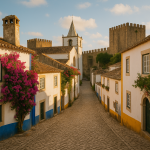
About an hour north of Lisbon by road, traffic permitting, Óbidos offers an unusually easy introduction to medieval Portugal. Enter through the Porta da Vila, pause beneath its eighteenth-century blue-and-white tiles, then follow Rua Direita toward the castle. The town is closely associated with Portugal’s queens: King Dinis gave it to Queen Isabel in 1282, continuing a royal connection that shaped its history. For Americans accustomed to organizing European days around timed museum entries, the pleasure here is simpler. The streets themselves supply the story. This and the five towns below are alternative anchors for a memorable day, not stops on one ambitious circuit.
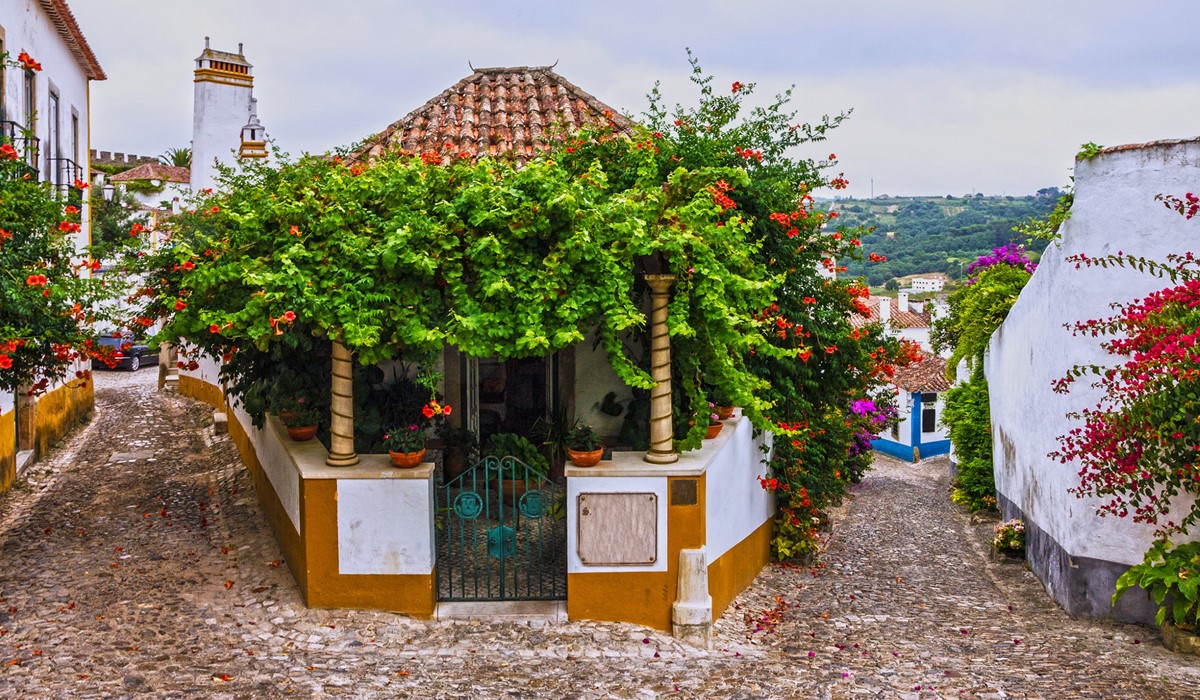
Leave the busiest shopping stretch for lanes edged with whitewashed houses, then settle over lunch before tasting ginjinha, the local sour-cherry liqueur. English is widely spoken in visitor-facing businesses here, making a first outing straightforward. The walls require more judgment: sections have unprotected edges and uneven footing. Families and anyone uncomfortable with heights can enjoy the town perfectly well from street level.
2. Monsaraz, for a long lunch above the Alentejo
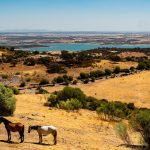
Monsaraz is best approached without a crowded afternoon agenda. From Évora, allow roughly an hour by road, then walk through a gateway into a small settlement of pale houses and dark schist. Its medieval fortifications overlook a landscape transformed much later by the Alqueva reservoir. That contrast gives the day its story: old defensive walls above a vast, modern expanse of water. Visit the castle enclosure, then seek out the fresco known as the Good and Bad Judge in the former council building, subject to opening arrangements. It is a striking reminder that medieval civic life involved arguments about justice as well as battles.
At lunch, look for migas, often made with bread and garlic and served alongside pork, or an Alentejo lamb stew when available. Wines from around Reguengos de Monsaraz make a natural accompaniment. For travelers comparing Portugal with France or Italy, value here is worth judging through the whole experience: regional cooking, local wine and an afternoon that needs few additional attractions.
3. Marvão, where the landscape explains the fortress
The approach to Marvão is part of the pleasure. Its walls rise from a granite ridge in the Serra de São Mamede, close to the Spanish border, and the final winding road makes the choice of a driver feel particularly sensible. Inside, the town rewards a slow progression toward the castle rather than a hurried march. Its name recalls Ibn Marwan, the ninth-century rebel associated with this stronghold, although much of the surviving defensive fabric belongs to later medieval rebuilding. At the castle cistern, pause to consider the practical problem behind every romantic fortress: keeping people supplied with water during a siege.
Portugal Magik’s Mercedes-Benz vehicles make the road journey comfortable, while a local driver/guide can shape the day around the guests, balancing walking, lunch and time simply to sit. Castelo de Vide lies roughly twenty minutes away by road if everyone wants another stop. Otherwise, remain in Marvão for regional sheep’s cheese and, in autumn, dishes featuring the area’s chestnuts. Sturdy shoes matter more than a packed schedule.
Browse our travel inspiration for ideas, or tell us what kind of day you have in mind.
4. Sortelha, where granite becomes the whole afternoon
Sortelha feels different from the whitewashed towns farther south. Here, houses, paving and defensive walls seem to emerge from the same granite. King Sancho II granted the town a charter in 1228, and the castle still supplies the visual center of its enclosed medieval core. Arrive in the morning, when the stone catches the changing light, and walk slowly enough to notice doorways fitted around irregular rock. This is an especially satisfying choice for Americans who have already visited Europe’s grand capitals and now want a place that can be understood on foot, through texture and scale rather than a long checklist.
Belmonte is roughly half an hour away by road, making a second cultural stop possible without consuming the day in transit. Lunch might include regional goat or lamb dishes, depending on the restaurant, with a Beira Interior wine. Arrange meals thoughtfully rather than assuming every small dining room opens daily. Sloping cobbles and exposed castle areas also make this a day for sensible footwear and selective climbing.
5. Trancoso, for stories beyond the battlements
Enter Trancoso through the Portas d’El Rei and the fortified town quickly reveals more than military history. King Dinis married Isabel of Aragon here in 1282, a royal event remembered locally, but its Jewish heritage deserves equal attention. The Isaac Cardoso Jewish Interpretation Centre introduces a community whose history cannot be understood from picturesque streets alone. Allow time for that visit before walking toward the castle. For couples or families with older children, the combination gives the day welcome depth: a royal marriage, a trading town and the complicated history of religious life in Portugal.
At a café, ask for sardinhas doces de Trancoso, a local sweet whose name misleadingly suggests fish. Almonds and eggs belong to its confectionery story instead. Trancoso also works well for travelers who prefer a lived-in town to an exclusively visitor-oriented village. English is less predictable in small inland businesses than in Óbidos, so a little Portuguese courtesy and help interpreting a menu are useful.
6. Castelo Rodrigo, for the day’s last light
Castelo Rodrigo occupies a hill above Figueira de Castelo Rodrigo, with medieval walls enclosing a compact historic village. The Treaty of Alcañices in 1297 brought this border territory definitively into Portugal. Later history appears in the ruined palace of Cristóvão de Moura, attacked during the upheaval surrounding the restoration of Portuguese independence in 1640. Those layers make the village more interesting than a single medieval label suggests. Walk past the pillory and stone houses, then pause at the ruined palace before looking outward across the countryside.
Local almonds and wines from the surrounding Beira Interior offer a fitting final taste. Rather than promising that Portugal is always cheaper than Spain, France or Italy, this day suggests a more useful comparison: how much enjoyment can fit into a small place without elaborate arrangements? Leave room for a bench, a conversation and the changing light. The best walled-town day ends with a story you remember, not a tally of gates crossed.
Plan your own day
Share your dates, group size and interests, and we will suggest a tailored plan with a local driver/guide.