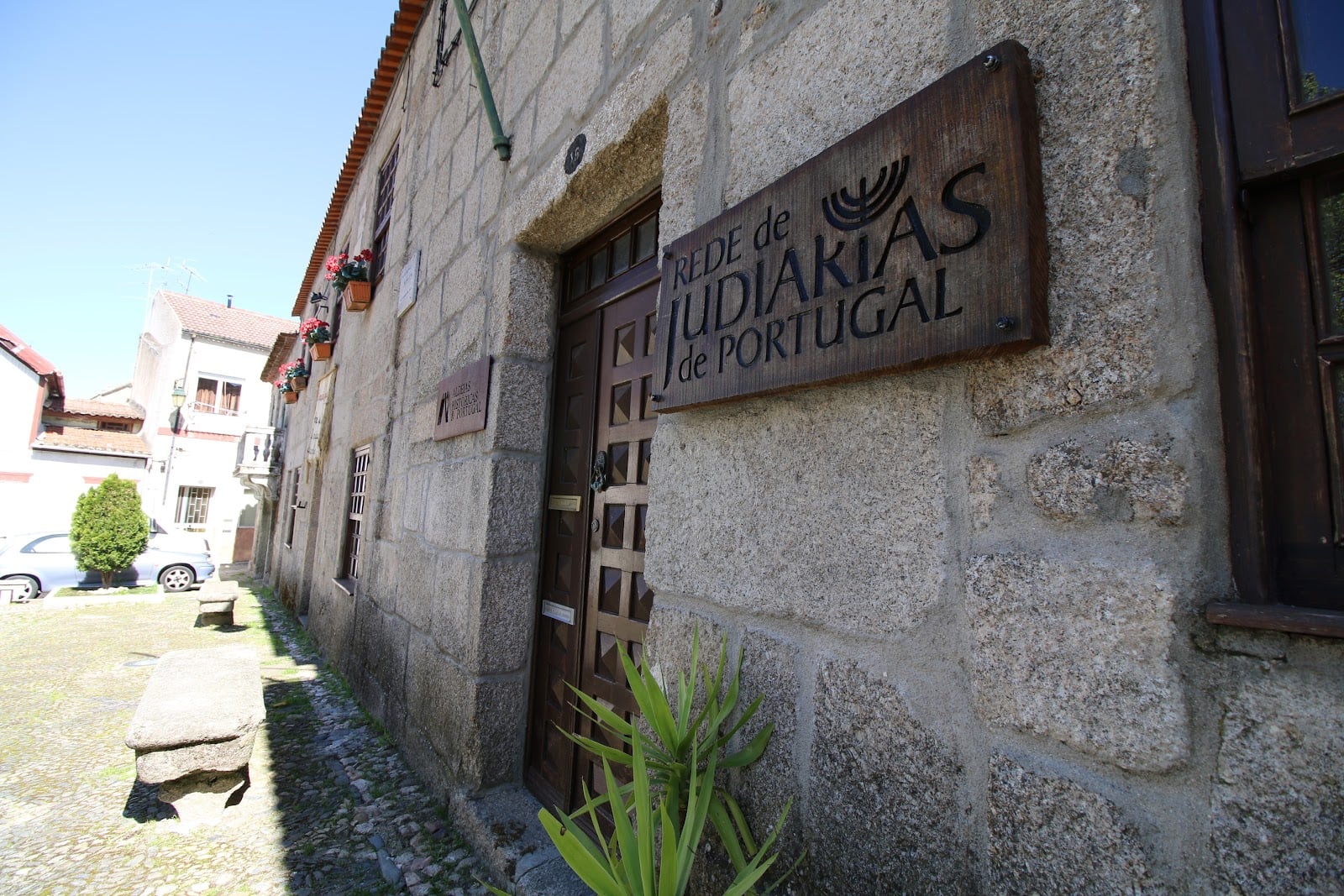
Trancoso's Jewish heritage includes the Isaac Cardoso Centre, opened in 2012, the small Beit Mayim Hayim synagogue, and the debated Casa do Gato Negro. This article separates what is documented from what remains uncertain.
A Town With a Documented Jewish Past
Trancoso, in the Guarda district, had an established Jewish community during the medieval period, documented through historical records that describe its presence within the town's social and economic life before the upheavals of the late fifteenth century.
As in other Portuguese towns, this community was affected by the 1496 expulsion decree and the 1497 forced conversions, after which open Jewish religious life ceased for several centuries.
Interest in Trancoso's Jewish history has grown in recent decades, supported by both academic research and the development of sites dedicated to presenting this history to visitors.
The Isaac Cardoso Centre, Opened in 2012
In 2012, Trancoso opened the Isaac Cardoso Centre for Jewish Interpretation, named after a notable figure associated with Sephardic intellectual history, as a dedicated institution to present the town's Jewish heritage to visitors.
The centre provides historical context on the medieval Jewish community of Trancoso, as well as the broader regional history of Jewish life in this part of Portugal, drawing on documentary and archaeological research.
As a modern institution rather than a historical building in continuous use, the centre serves an interpretive and educational function distinct from any surviving religious structure in the town.
Beit Mayim Hayim
Trancoso is also associated with a small synagogue known as Beit Mayim Hayim, which relates to the town's modern reconnection with its Jewish heritage rather than representing a continuously used medieval structure.
This small synagogue reflects a broader pattern seen in several Portuguese towns, where renewed interest in Jewish heritage in recent decades has led to the establishment or restoration of spaces for Jewish observance and reflection.
Visitors should understand Beit Mayim Hayim within this modern context, alongside the Isaac Cardoso Centre, as part of Trancoso's effort to present and reconnect with its Jewish history.
The Uncertain Case of Casa do Gato Negro
Trancoso also contains a building known as Casa do Gato Negro, the House of the Black Cat, which is popularly associated with Jewish heritage, though its specific historical attribution remains uncertain and is debated among researchers.
Local tradition links the building to Jewish history in the town, but documentary evidence establishing a definitive original purpose or ownership is not conclusive, meaning claims about the building should be treated with appropriate caution.
Responsible presentation of Trancoso's heritage distinguishes between the well-documented medieval Jewish community and the more uncertain, tradition-based claims surrounding specific buildings like Casa do Gato Negro.
Separating Documented History From Tradition
A careful approach to Trancoso's Jewish heritage relies on distinguishing between institutions with clear documented origins, such as the Isaac Cardoso Centre and Beit Mayim Hayim, and sites where attribution rests more on local tradition than on firm evidence.
This distinction matters for visitors seeking an accurate understanding of the town's history, since conflating documented fact with uncertain tradition can create a misleading picture of what is actually known.
Trancoso's layered history, spanning medieval settlement, forced conversion, and modern commemorative efforts, makes it a valuable but nuanced stop for those studying Jewish heritage in Portugal.
Visiting Trancoso Within a Wider Journey
Iberian Heritage Journeys includes Trancoso within its private multi-day Jewish heritage travel itineraries across Portugal and Spain, with private heritage driver-guides able to explain the distinctions between documented and uncertain sites in the town.
Trancoso works well as part of the 10-day complete immersion itinerary or the 12-day Iberian journey, often grouped with other towns in the interior region such as Belmonte and Guarda.
These itineraries do not provide genealogy research or citizenship and legal services, remaining focused on historical travel and the careful presentation of documented heritage.
Visitors planning a trip benefit from understanding this background in advance, since it adds depth to the experience of standing in these historic places and helps connect what is seen on site to the longer arc of Portugal's Jewish history across different regions and centuries.
Visitors planning a trip benefit from understanding this background in advance, since it adds depth to the experience of standing in these historic places and helps connect what is seen on site to the longer arc of Portugal's Jewish history across different regions and centuries.
Visitors planning a trip benefit from understanding this background in advance, since it adds depth to the experience of standing in these historic places and helps connect what is seen on site to the longer arc of Portugal's Jewish history across different regions and centuries.
Plan your Jewish heritage journey
Share your dates, interests and group size and we will suggest a tailored private itinerary with a local driver/guide, including heritage-focused visits. Access arrangements are confirmed before booking.